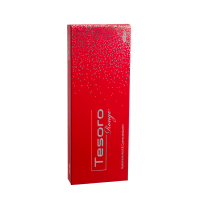
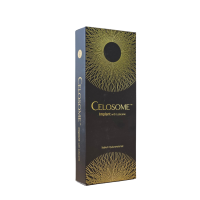
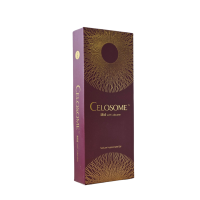
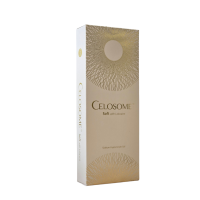
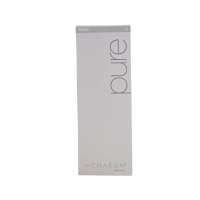
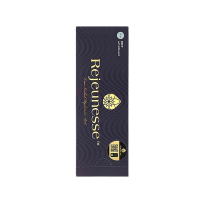
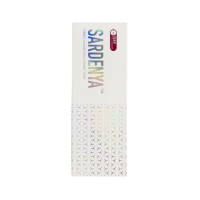
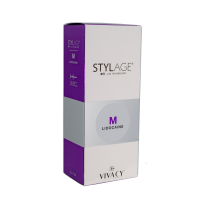
Modern cosmetology has long gone beyond the simple "filling of wrinkles". Today, working with fillers is about facial architecture and delicate tissue restoration. By restoring tissue volume deficit, compensating for lipoatrophy and providing soft vector support, the drug allows you to harmonize the oval of the face, improve the projection of individual zones and restore proportions.
The mechanism of action is based not only on mechanical filling of the defect. Modern fillers provide:
Dermal fillers are sterile injectable implants in the form of a gel, intended for injection into various layers of soft tissues (from the superficial dermis to the supraperiosteal level, depending on the indications).
Main tasks:
The key is the correct choice of the drug, injection technique and anatomical level of implantation.
The range includes drugs of different densities and rheological characteristics, which allows you to individualize the correction protocol.
By rheological properties
Soft (low G’) - for delicate areas: periorbital area, lips, nasolabial folds, superficial correction.
Medium density - for nasolabial folds, marionette lines, lip contouring.
High density (high G’) - for structural support: cheekbones, chin, lower jaw line.
Cohesion
The ability of gel particles to stick together. Determines whether the filler will “spread” or stand monolithically.
Degree of reticulation (crosslinking)
Determines the duration of the drug’s presence in the tissues (usually from 6 to 18 months).
Monophasic fillers
Monophasic fillers are uniform, homogeneous hyaluronic acid gels in which stabilized hyaluronic acid molecules are evenly distributed throughout the volume of the drug.
Characteristics:
Advantages:
Indications:
Biphasic fillers
Biphasic fillers are gels consisting of stabilized hyaluronic acid particles suspended in a carrier gel of unstabilized hyaluronic acid.
Characteristics:
Advantages:
Indications:
Main indications:
Contraindications:
Hyaluronic fillers are much more interesting than just “gel in a syringe”. Here are some little-known and fascinating facts that will help you understand this product even more deeply and, perhaps, surprise your patients during the procedure:
1. Bacterial origin (it's not scary, it's progress)
Previously, hyaluronic acid was obtained from rooster combs. Today, 99% of fillers are produced by bacterial fermentation (most often using Streptococcus equi strains). This makes the product as pure as possible, ethical (vegan-friendly) and hypoallergenic, since it does not contain animal proteins.
2. Hyaluronic acid is a "record-breaking sponge"
A single hyaluronic acid molecule is able to hold an amount of water that is 1000 times its own weight. That is why fillers not only create volume, but also work as a powerful internal moisturizer. However, it is important to remind patients about their drinking regimen - the filler needs water to "bloom".
3. The secret of “crosslinking” (BDDE)
Pure hyaluronic acid is broken down in the body in 24–48 hours. To make it last for months, the molecules are “crosslinked” with a special agent — BDDE. Interesting fact: The less free BDDE remains in the filler after production, the safer and more premium the drug is considered. High-tech purification is what the patient pays for in expensive brands.
4. The Tyndall effect: the physics of color
If the filler is injected too superficially, the skin may acquire a bluish tint. This is not a bruise and not the color of the gel itself. This is the Tyndall effect — the scattering of light through the gel particles. Light with a short wavelength (blue) is scattered more strongly, which is why we see “blue” through thin skin.
5. Effect on your own collagen
Fillers do not just take up space. Studies show that the injection of HA filler creates mechanical pressure on fibroblasts (skin cells). This "wakes" them up and forces them to produce their own collagen. That is, even after the drug is completely absorbed, the skin at the injection site often looks better than before the procedure.
6. Hyaluronidase - a cosmetologist's "magic wand"
Hyaluronic fillers are the only ones that have a 100% antidote. If you don't like the result or there are complications, the hyaluronidase enzyme will dissolve the filler in literally hours. This gives cosmetologists a "right to make a mistake" and a huge level of safety that Radiesse or polylactic acid do not have.
7. "Wandering" filler (Migration)
It is a myth that the filler can "flow" from the lips to the cheek. However, there is a concept of micromigration: due to excessive muscle activity or too large a volume of the drug, the gel can go beyond the contour (for example, create a "hyaluronic mustache" above the lip). That is why the technique of administration and dosage are more important than the brand of the drug.
Fillers today are a tool for intellectual rejuvenation. The main trend is the "natural look". The best work of a cosmetologist is the one that is not noticeable, but from which the patient looks rested and fresh.
Choosing the right filler is a balance between the physics of the gel, the anatomy of the patient and your artistic vision.